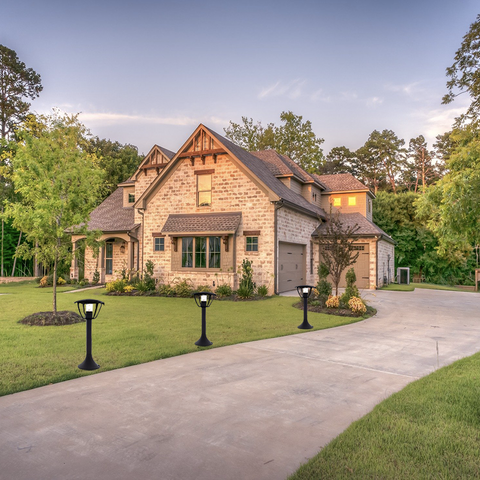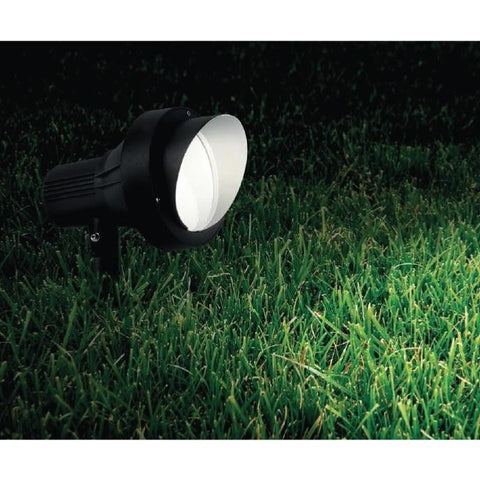





To show off an outdoor space with the right lighting, it is just as important to choose the right light output. Expressed in lumens, it varies depending on the area you want to light: the number of lumens needed for a patio is not the same as the ideal brightness for lighting an entrance or the edge of a swimming pool. In this guide, Silumen, your outdoor lighting expert, tells you everything you need to know about the light output to choose for each of your outdoor spaces.
What is a lumen?
Abbreviated lm, the lumen is the unit of measurement for the luminous flux of a light. It therefore measures the light output, or the strength of the luminous flux, that a light fitting emits when it is switched on. This light output is given as a numerical value that quantifies the lighting performance.
The lumen
The lumen became popular as a unit for measuring light output as LED technology became widespread. Before the rise of LEDs, people chose a lamp according to its power measured in watts (W): the higher the figure, the brighter the lamp. This measure quickly became obsolete with the popularity of LED lighting, which delivers far better light output than its predecessors for a much lower wattage. For example, a 25W halogen bulb has a lower light output (around 200 lm) than a 20W LED bulb (around 2,000 lm). With this in mind, measuring luminous flux in lumens is the way to go when choosing a light fitting based on its lighting performance, as it is more reliable and more relevant.
| Light output | 200lm | 800lm | 1200lm | 1900lm |
|---|---|---|---|---|
| Incandescent | 25W | 75W | 100W | 150W |
| Halogen | 25W | 60W | 85W | 110W |
| LED | 2W | 9W | 12W | 20W |
Lumens vs watts
While it is clear that using lumens rather than watts is more reliable when choosing lighting based on its efficiency, the right figure is not chosen at random. It depends on important factors such as the type and size of the space to be lit. For example, lighting a 20 m² patio and highlighting a small flower bed are very different matters. This is where the lux comes in.
With the symbol lx, the lux is a value that corresponds to the ideal lighting per square metre of a space, in other words the optimal luminous flux that each square metre of an area should receive. It is calculated with the following formula:
Lux/Amount of light per m² (lx) = Light output (lm) / Area of the space (m2)
For certain types of spaces, there are recommended lux ranges or exact values for optimal lighting. Knowing these values then lets you work out the total light output a space needs. The lux value is also needed to determine how many light points to install for satisfactory lighting. This gives the following formulas:
Light output needed for a space (lm) = Lux (lx) x Area of the space (m²)
Number of light points to install = Recommended lux for the area / Lux of the light fitting
What light output should you choose for each outdoor space?
In theory, each outdoor area of your property is associated with an average lux value, which you can then use to estimate the light output (lm) needed to achieve this ideal amount of light per m². However, there is no rule requiring you to stick to these values to the exact lux or lumen, because your lighting preferences and factors such as the desire to save electricity matter too. They are more of a guide designed to make it easier to lay out your spaces.
Discover the different light outputs we recommend for each area of your outdoor space, including living areas, decorative features and areas that need functional lighting.
How many lumens to light a patio?

A patio is an outdoor living space where a rather warm light is preferred: ideally it should be around 150 lux, or 150lm/m². This amount of light per square metre gives optimal visibility while avoiding glare. Simply multiply this value by the area of your patio in m² to get an idea of how many lumens you need to light it.
Take the example of a 20m² covered patio. In this case, you need a total light output of 3,000 lumens, spread across a few matching light fittings or installed directly in the centre of the covered patio ceiling. You could, for example, choose 3 outdoor wall lights of 10W spaced evenly across the walls.
How bright should a garden be?
A garden may be some distance from the lit facade of your house, so it needs several light sources to show it off. The lighting installed there can range from 100 to 250 lux, or 100-250lm/m², depending on whether you prefer soft light or something a little brighter.
As for the fittings to install, you can choose waterproof outdoor LED bollards. For a 60m² garden where you want to install very soft lighting of 100 lux, you will therefore need a total of 6,000 lumens.
Light output around a swimming pool
Just like the lawn and the patio, a swimming pool should be lit for aesthetic reasons and also for safety. Once again, there is no rule or exact brightness to follow: the key here is to choose small waterproof fittings to mark out the edges of the pool. If you want to install fittings less than 3 metres from the edge of the pool, we suggest recessing 130-lumen IP68 LED spotlights at regular intervals.
What light output should you choose to light decorative features?
When lighting outdoor decorative features such as a tree or a small flower bed, the main purpose is to highlight the feature next to which the light is installed. So, for each decorative feature, a light output as low as 100 lumens can be enough. You can install LED spike lights in front of or beside any feature you want to light. Another option is to wrap an IP65 solar string light around your trees.
How many lumens for path lighting?
Marking out your garden paths or the edges of your lawn both decorates your outdoor space by lighting it up and lights it once night falls. Besides its aesthetic role, path lighting makes the space visible enough to find your way in the dark. Once again, there is no need for powerful fittings: lights with a brightness of 100 or 200lm are perfectly adequate. For greater safety, you could, for example, choose a pack of 5 solar LED bollards of 200 lm with motion sensors.
The ideal light output for an entrance

The surroundings of your house, your front porch and the garage entrance are areas that need strong, deterrent lighting. The brightness must be high enough for you to find your entrance easily, and it must also make it secure. However, it should not be too dazzling, as it loses its security value if it stops you from seeing properly. A light output corresponding to 250 or 300 lux would be ideal. To light a 5m² entrance porch, we therefore recommend one or two fittings with a total light output of between 1,250 and 1,500 lumens, the equivalent of 2 wall lights of 7W installed on either side of the door.
To improve the security of your home, we recommend choosing fittings with a motion sensor and/or a dusk-to-dawn switch. The sensor switches your lighting on when movement is detected, while the switch turns your light on automatically as soon as it starts to get dark.