



With the same light output (in lumens), the results will differ depending on whether the beam angle is wide or narrow: the perceived intensity of the luminous flux will not be the same.
So don't underestimate its impact. Let's take a closer look at this technical term!

Different types of beam angle
All light fittings emit a set of light rays known as a light beam. You can see it when it is projected onto a flat surface, where it forms a circle of light. The light beam varies in intensity and diameter depending on the light source.
The beam angle measures the opening angle of the light beam, expressed in degrees ("°" or "D"). To quantify the perceived intensity, the measurement is taken from the optical axis, where light intensity is at its maximum, out to the point where it has dropped by 50%.

Depending on the size of the reflector and the beam spread, the lighting will be more or less intense and more or less diffused.
Here is a table to shed some light on which fittings suit the angle you are looking for:
| ANGLES | TYPE OF LIGHTING | EXAMPLE FITTINGS | |
|---|---|---|---|
Narrow angle Directional lighting | < 30° |
| |
| Between 30° and 45° |
|
| |
| Between 45° and 60° |
|
| |
Wide angle General lighting | Between 60° and 80° |
| |
| > 80° |
|
|
Applications: choosing a fitting with the right beam angle
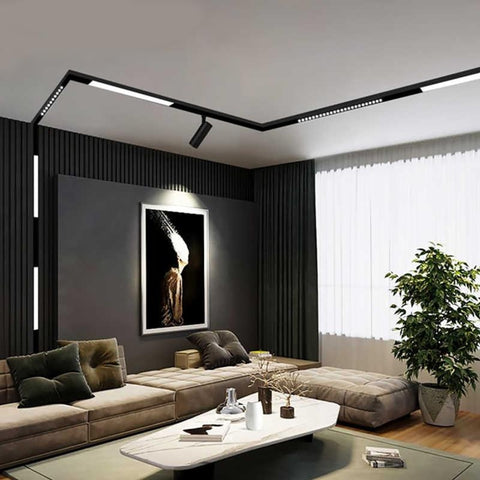
It is important to choose the right fitting to get the best beam angle for optimal comfort and experience. In a commercial space (shop, gallery) where objects need to be showcased, the usual choice is a narrow-angle fitting such as LED track spotlights. This requires a beam angle of around 30°.
To light an area and its immediate surroundings, in a walk-in wardrobe or a shop window for example, you need directional lighting with a beam angle of between 30 and 45°. For even wider directional lighting, you can opt for LED track spotlights with a beam angle of between 45 and 60°.
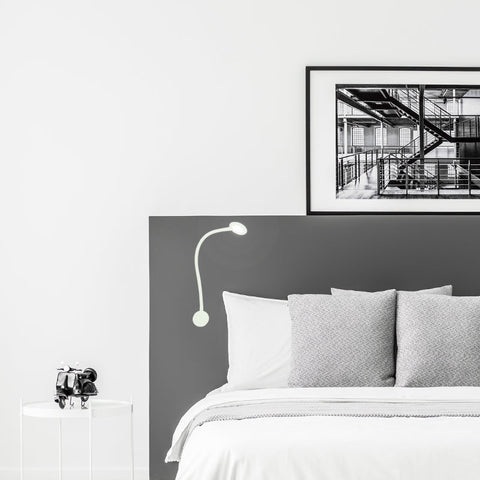
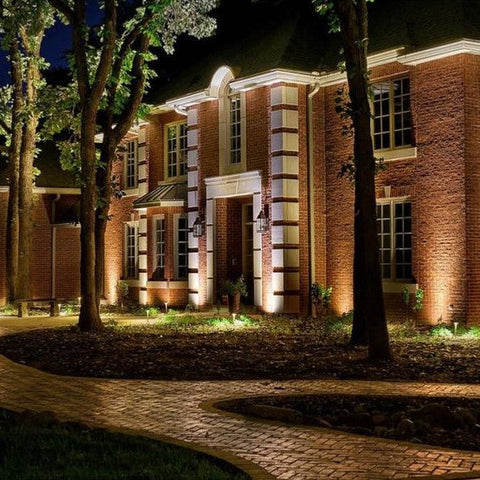
To light floors and walls, LED wall lights and outdoor and indoor LED spotlights can achieve a beam angle of up to 145°.
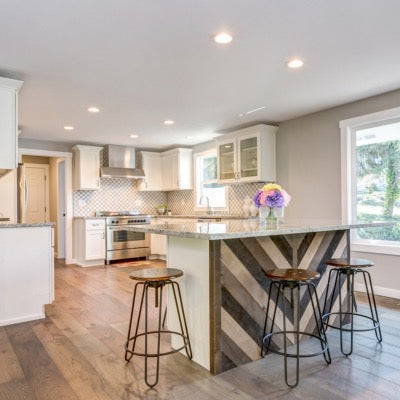
They give a harmonious, even result for any living space or worktop.
Finally, for larger lighting needs, take the time to choose your floodlights or industrial high bays carefully (especially if you have a high ceiling).
For general lighting with a wide beam angle, choosing battens, LED bulbs or a panel can be a good solution! Feel free to contact us for a personalised quote for your lighting project.